The sun is more present in my life. March was a busy month with little time for reading, but one in which two books presented two very different lives of women, and I read some classic food for thought in a time of global political turmoil.
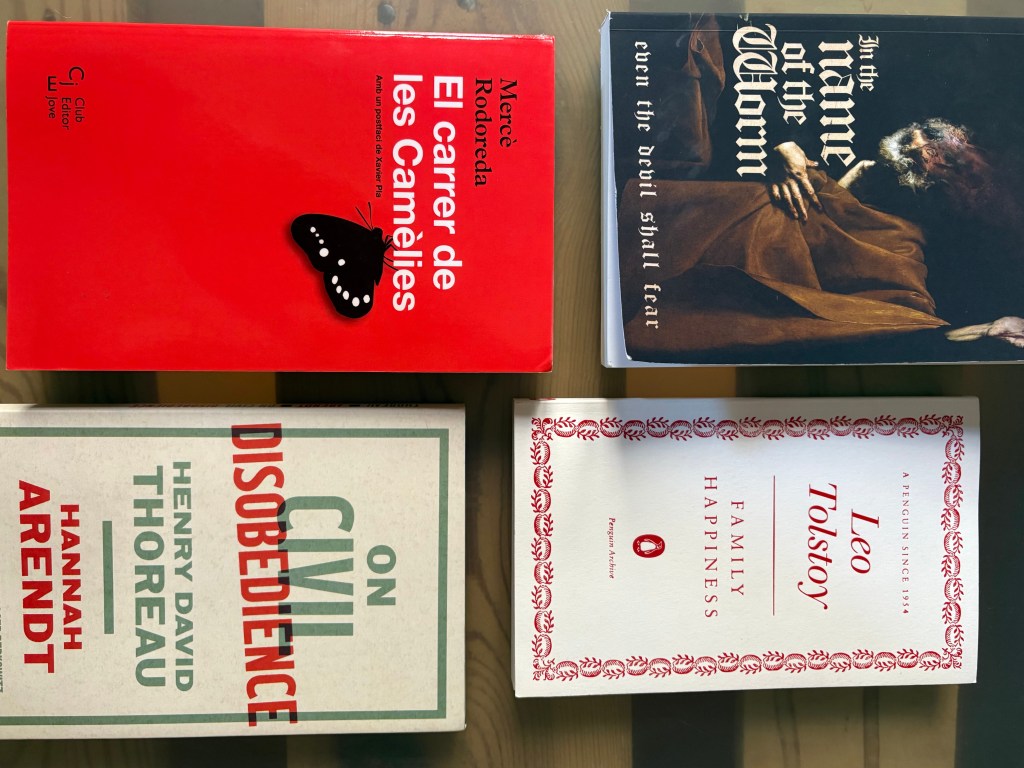
Family Happiness – Leo Tolstoy
A very good read. In 124 pages, Tolstoy tells a story of slow disenchantment and unspoken expectations. The protagonist tells her story in the first person, looking back in time: how she fell in love with her husband, and how their relationship changed.
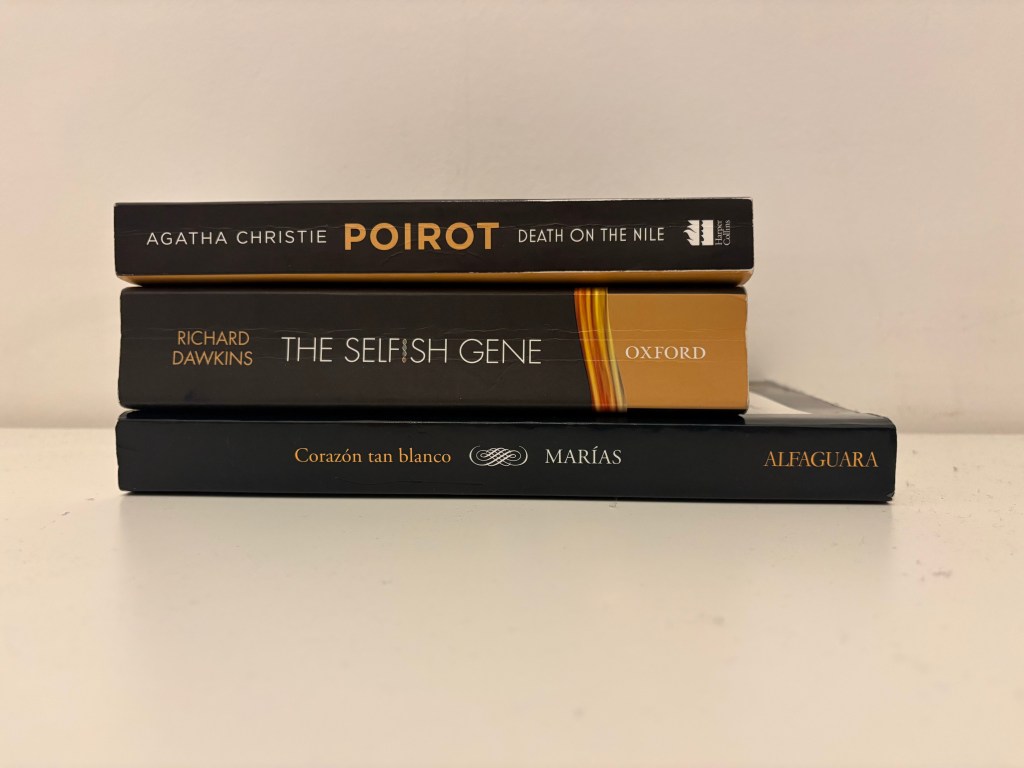
I can’t help but draw comparisons with Corazón Tan Blanco, which I read last month. Both books were explorations of the thoughts and feelings of the narrator, and in both stories not much happens. But Family Happiness was, for me, a better read, not only because of the intensity of the prose, but mainly because the character changes, lives, and takes action.
I did find the ending a bit stereotypical: (SPOILER) filling the void of romance with the love for children. But I also understand that this is a reality for many, and maybe I was just disappointed because I am afraid of this happening to me.
But apart from that small detail, which, like I said, might be on me, this was a great book, and worth rereading in the future.
Civil Disobedience – Henry Thoreau, Hannah Arendt
Lots of mental gymnastics not to pay taxes.
Two different perspectives on what it means to be disobedient. For Thoreau, it is about the individual’s moral obligation to resist government mandates and decisions that one does not agree with. Arendt speaks about change coming from organized, collective resistance against morally wrong governments or policies.
Thoreau saw the act of breaking the law in protest as the first necessary step for the community to see and understand injustices in the system. One act of disobedience against unjust laws is the seed for change. Because of that, he refused to pay taxes to a government that was waging war in Mexico and upholding slavery. He also let his aunt pay those taxes for him so that he would not spend more than one night in jail. Apart from that, it lays out a pretty good argument for peaceful resistance toward morally wrong practices.
Arendt argues that civil disobedience is a necessity for America’s justice system to correct its unjust laws. She defends the need for laws that protect civil disobedience, especially in cases where it defends constitutional rights or the voices of people who have lost their power in the democratic process.
Influential texts that have shaped not only America but also global social change in the last centuries. It also provokes questions about where one is being too complacent with the government, or how profound change can be if resistance is respected by the law.
El carrer de les Camèlies – Mercè Rodoreda
A Catalan classic that I dismissed in school. On one hand, I’m glad I did, because I wouldn’t have enjoyed the book as much 10 years ago. On the other, I would’ve liked a teacher to discuss it with.
The style was great; the book keeps one engaged. It is psychological, expressing a wide range of thoughts and feelings in a simple way. The protagonist narrates her life looking for the love of men, and finds nothing but misfortune. She seems to have a way of choosing the wrong men, but is able to detach herself from the difficult circumstances she finds herself in, often holding on to the little light she is able to find.
It is set in 20th-century Barcelona, describing not only parts of the city but also the society of that time. This was an added element for me that made this book so good.
It stands in contrast with Family Happiness. Set in different times and places, both depict women with different options and restrictions, yet share a similar psychological exploration of love, expectations, and disappointment.
I really liked this book. The novel is realistic and tragic. The protagonist is strangely likeable, making it both difficult to question her choices and difficult not to empathize with her due to her marginalized circumstances. If a book leaves one with an aftertaste, it was a good book. This one left an aftertaste, but I’m not sure what kind. I would recommend it.
In the Name of the Worm – Mitchell Lüthi
I try to avoid not finishing books, but halfway through, I really did not have the feeling that I wanted to keep investing time in it. I will therefore refrain from saying much about the book or the writer, and just say that I personally didn’t get the feeling that I understood the characters or the story. I didn’t get into this book, which is not to say it is necessarily a bad book. Maybe I just picked it up at the wrong time for me.
On the plus side, quitting it made me pick up The Count of Monte Cristo, of which I’m sincerely enjoying every page.

 leo burghaus
Leave a comment